← The Workshop Collection
TRANSITIONS & INDEPENDENCE

Supporting the Transition to Independence for Neurodivergent Individuals

Independence is not the absence of support. It’s the ability to direct your own life with the tools you need.

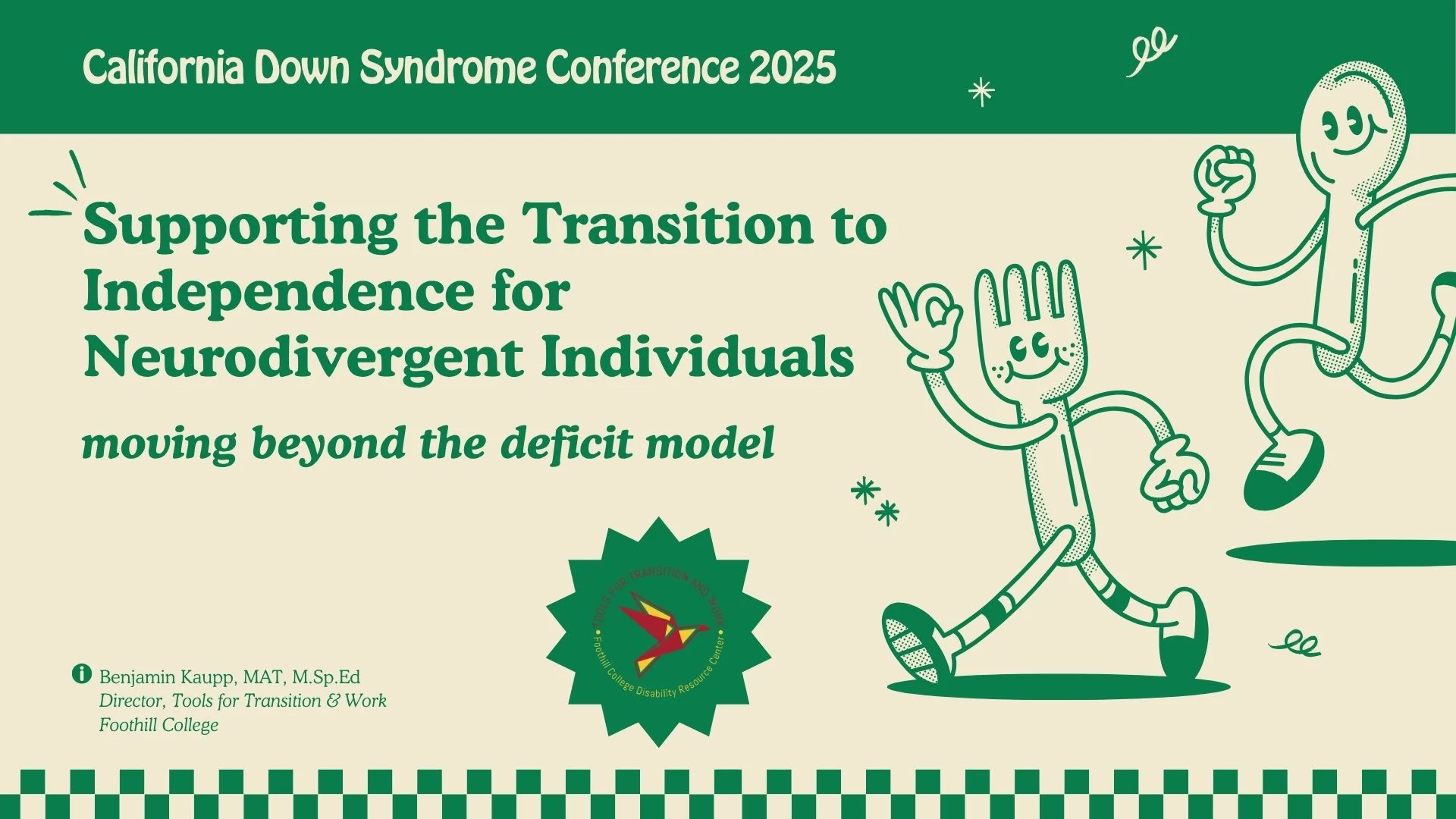
Cover: Supporting the Transition to Independence, California Down Syndrome Conference 2025
From the actual presentation materials.
THE LONGER VERSION

What we’ll get into.

Independence has a public relations problem. Sometimes people use it to mean freedom and self-direction. Other times they use it to mean withdrawing support and hoping for the best.

We'll use a person-centered approach to look at agency, self-advocacy, expectations, scaffolding, and the many decisions involved in moving toward adult life.

The emphasis is on real opportunities to practice, make choices, recover from mistakes, and build the skills that matter to the person whose future we're discussing.

What participants will explore

  • Person-centered planning
  • Agency, choices, and real expectations
  • Scaffolding support without taking over
  • Learning from productive failure

What I hope they leave with

A more useful definition of independence and ways to support it in everyday practice.
A SMALL BUT IMPORTANT DISTINCTION

A Note on the Stanford Recording

This presentation was originally delivered at Stanford's California Down Syndrome Conference. A recording was later included as an instructional module in a Stanford Medicine continuing medical education course, where I'm credited in the activity's faculty listing.

That isn't the same thing as holding a Stanford faculty appointment. I'm happy to take credit for the talk; no need to borrow anybody's academic business cards.

See the CME activity